Straw Breathing: A Simple Way to Slow Down and Find Your Anchor
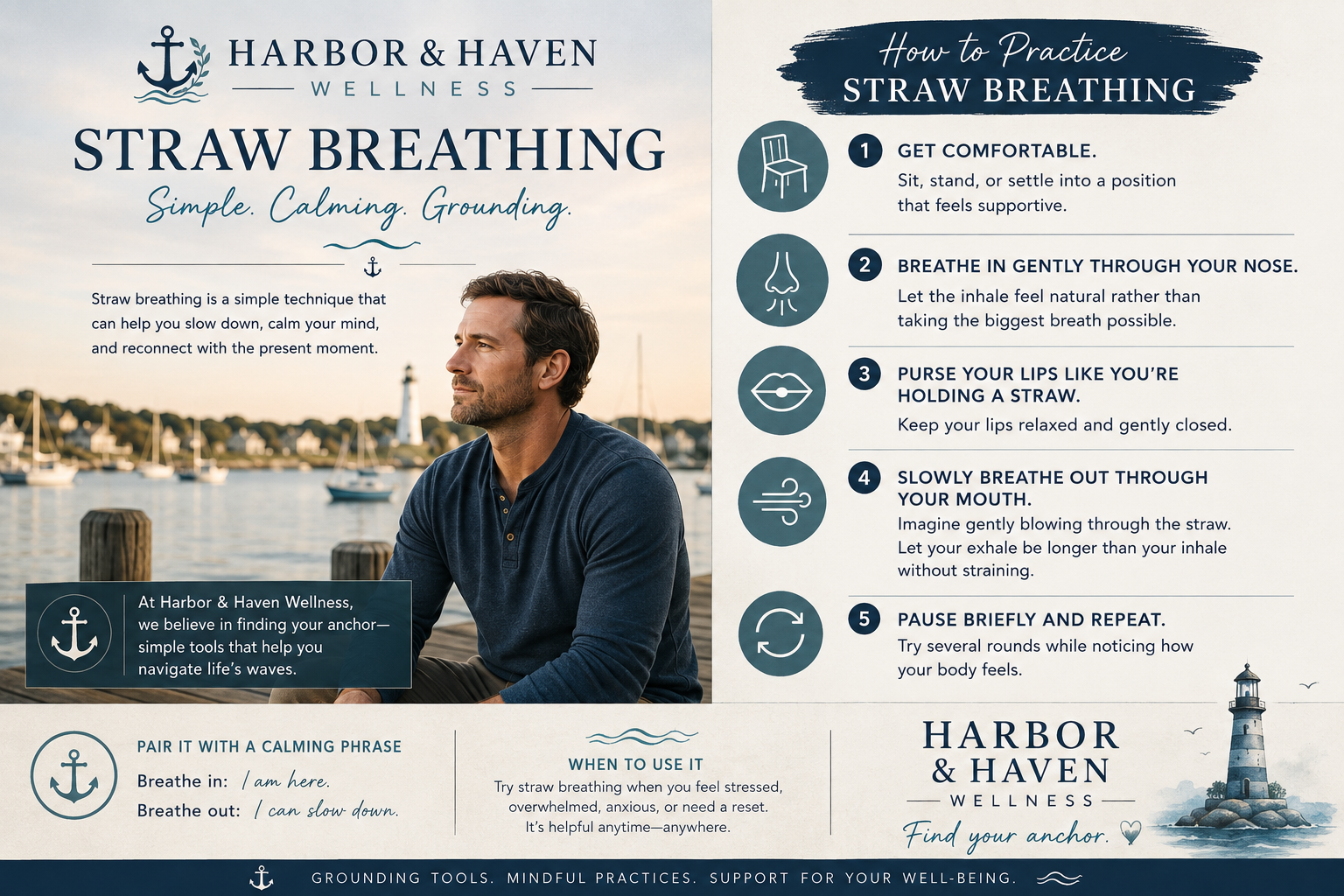
When stress, anxiety, or strong emotions begin to build, sometimes the most helpful coping skills are the simplest ones. Straw breathing is an easy breathing technique that can help you slow your breathing, focus on the present moment, and create a small pause between you and whatever feels overwhelming.
At Harbor & Haven Wellness, we think of grounding skills as ways to find your anchor—small practices that can help you reconnect with the here and now when your thoughts or emotions feel stormy.
What Is Straw Breathing?
Straw breathing gets its name because you exhale as though you are slowly blowing air through a drinking straw.
You don't actually need a straw. Instead, gently purse your lips to create a small opening and allow your breath to leave your body slowly and steadily.
The goal isn't to take enormous breaths or force yourself to relax. It's simply to slow things down.
Try It
Get comfortable. Sit, stand, or settle into a position that feels supportive.
Breathe in gently through your nose. Let the inhale feel natural rather than taking the biggest breath possible.
Purse your lips like you're holding a straw between them.
Slowly breathe out through your mouth. Imagine gently blowing through the straw. Allow your exhale to last a little longer than your inhale without straining.
Pause briefly and repeat. Try several rounds while noticing how your body feels.
You might pair the breath with a simple phrase:
Breathe in: I am here.
Breathe out: I can slow down.
Why Can a Longer Exhale Feel Calming?
When we're stressed, our breathing can become quicker, shallower, or more irregular. Intentionally slowing the breath—particularly allowing the exhale to become comfortably longer—can help shift the body toward a calmer state.
Breathing also gives your mind something concrete to focus on. Instead of trying to force uncomfortable thoughts away, you're bringing your attention to something happening right now: the feeling of air entering your nose, your lips gently pursing, and the slow release of your breath.
That makes straw breathing useful as both a breathing practice and a grounding skill.
When Could You Use Straw Breathing?
Straw breathing can be practiced almost anywhere. You might try it when you notice anxiety building, before a difficult conversation, while sitting in your car before walking into work, when you're feeling overstimulated, or as part of your nighttime wind-down routine.
You don't have to wait until you're overwhelmed, either. Practicing coping skills during calmer moments can make them easier to remember when you actually need them.
Make It a Grounding Exercise
Want to add another layer to the practice? While breathing, notice:
What can I feel beneath my feet?
What sounds can I hear around me?
Where do I notice my breath in my body?
What is one thing I can see right now?
You can also hold a favorite grounding object—such as a smooth stone, small anchor token, crystal, or another meaningful item—and notice its weight and texture while you breathe.
Find Your Anchor
You can't always control when stressful moments arrive. What you can build is a collection of tools that help you navigate them.
Straw breathing is one small tool to add to your coping-skills toolbox. No complicated equipment. No perfect technique. Just a few intentional breaths and an opportunity to reconnect with the present.
When the waves feel strong, come back to your breath. Find your anchor.
Harbor & Haven Wellness resources are intended for general wellness and educational purposes and are not a substitute for individualized mental health or medical care.