Emotional Freedom Techniques
Finding Your Anchor: EFT Tapping When Emotions Feel Like Waves
Harbor & Haven Wellness | Between the Waves
Some days, emotions arrive like gentle ripples. Other days, they crash in like waves—stress, worry, anger, grief, or overwhelm showing up faster than we can make sense of them.
When the waters feel rough, sometimes we don’t need to solve everything. We simply need something that helps us find our anchor.
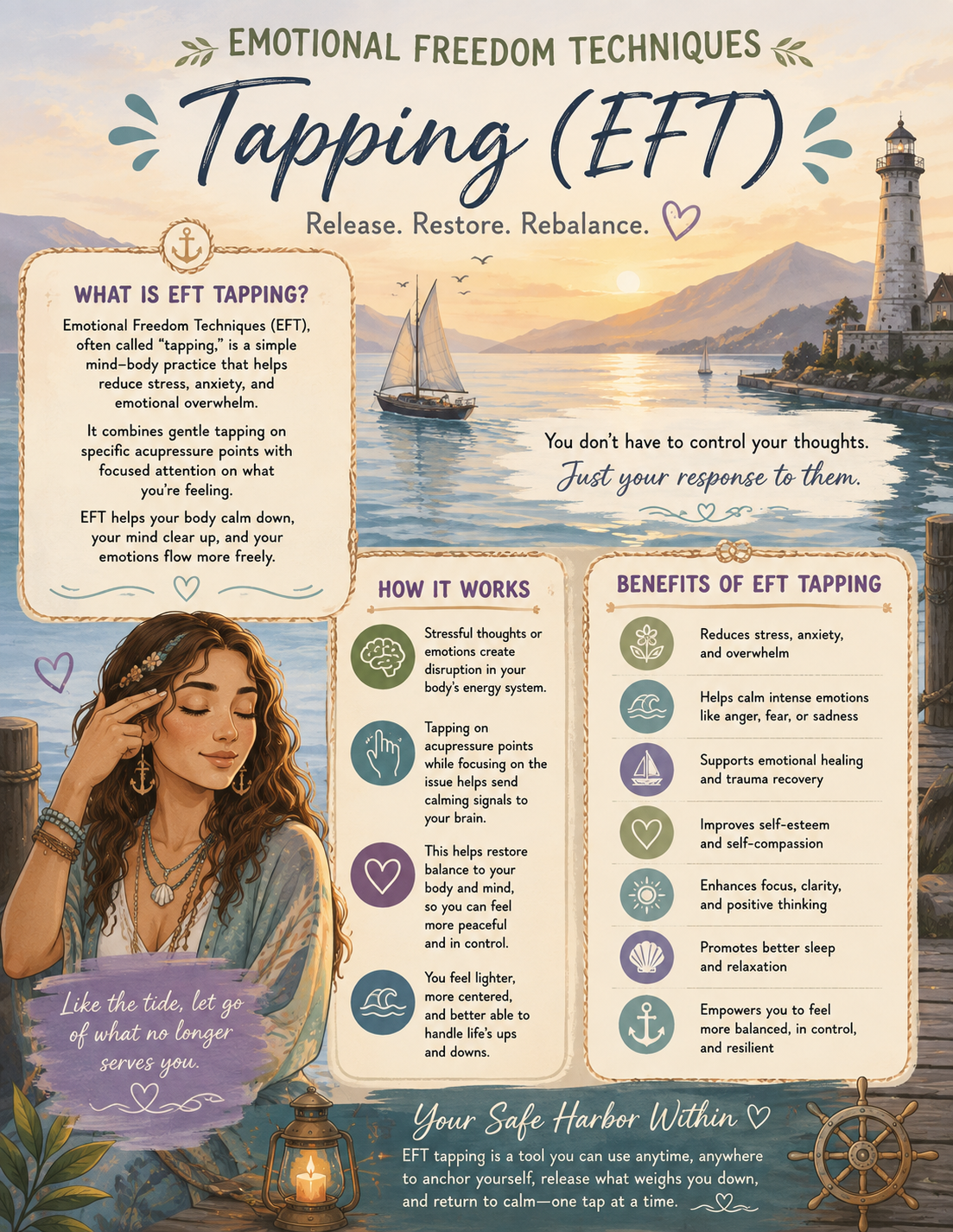
One practice people use for this purpose is Emotional Freedom Techniques (EFT), commonly called tapping.
What Is EFT Tapping?
EFT is a mind-body practice that combines gentle tapping on specific points of the body with intentional attention to thoughts, feelings, or physical sensations.
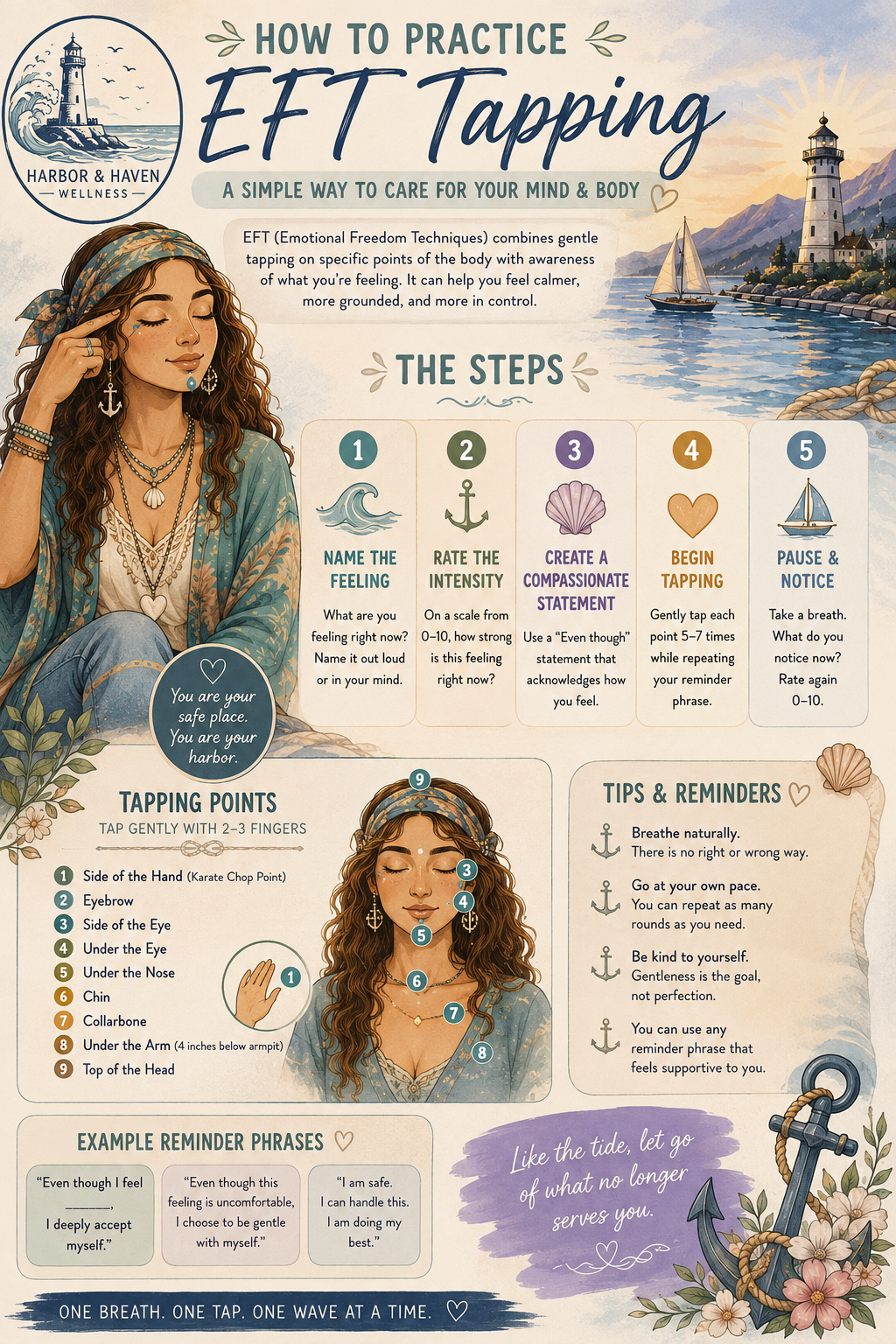
You may hear EFT described as a combination of elements from acupressure and psychological techniques. During tapping, a person typically notices what they are experiencing, rates the intensity of the feeling, uses a brief statement acknowledging it, and gently taps through a sequence of points on the face and upper body.
The goal isn't to force an uncomfortable feeling away.
Instead, tapping creates an opportunity to acknowledge:
“This is what I am experiencing right now, and I can care for myself while I move through it.”
Why Do People Use Tapping?
When we're overwhelmed, our bodies can respond before we've even had time to process what is happening.
Your heart may race.
Your muscles may tighten.
Your thoughts may speed up.
You might feel restless, irritable, frozen, disconnected, or unable to concentrate.
EFT is often used as a self-regulation practice during these moments. Research into EFT continues to develop, and some studies have found promising results related to stress and anxiety. It should not be considered a replacement for professional mental health or medical treatment, but it may be one tool within a larger wellness routine.
People may practice tapping to support:
Stress management
Relaxation
Emotional awareness
Coping with anxious feelings
Grounding during overwhelm
Self-compassion
Mindful awareness of thoughts and feelings
A Simple EFT Practice
Find a place where you feel comfortable. Before beginning, notice what is happening inside you.
1. Name the feeling.
Ask yourself: What am I noticing right now?
Maybe it's worry, frustration, sadness, tension, or simply, “I feel overwhelmed.”
2. Notice the intensity.
On a scale from 0–10, how strong does the feeling seem right now?
There is no correct number. You're simply checking in with yourself.
3. Create a compassionate statement.
Try:
“Even though I feel overwhelmed right now, I can give myself permission to slow down.”
Or:
“Even though this feeling is uncomfortable, I can be gentle with myself while I move through it.”
4. Begin tapping gently.
Using your fingertips, gently tap several times on commonly used EFT points, such as:
Side of the hand → eyebrow → side of the eye → under the eye → under the nose → chin → collarbone → under the arm → top of the head
As you move through the points, you can repeat a short reminder phrase:
“This stress.”
“This worry.”
“I am noticing what I feel.”
“I can slow down.”
5. Pause and notice.
Take a comfortable breath.
Ask yourself:
What do I notice now?
Rate the intensity again from 0–10. You don't need to reach zero for the practice to be worthwhile. Sometimes the goal is simply moving from an 8 to a 6—or creating enough space to choose what you need next.
You Don't Have to Fight Every Wave
Emotional wellness isn't about never feeling anxious, angry, sad, or overwhelmed.
The ocean isn't peaceful because it never has waves.
Sometimes wellness means learning how to ride the wave without allowing it to carry you away.
A grounding exercise, slow breathing, journaling, movement, mindfulness, or EFT tapping can become small anchors you return to when life feels uncertain.
With practice, you begin building a collection of tools that remind you:
I can notice what I'm feeling.
I can give myself space.
I can choose how I respond next.
A Reflection for Between the Waves
The next time you notice yourself becoming overwhelmed, consider asking:
What wave am I riding right now?
Then ask:
What would help me feel anchored while it passes?
You don't always have to calm the entire ocean.
Sometimes you just need to find your harbor.
Harbor & Haven Reminder
Like the tide, you can release what no longer serves you and return to your anchor—one breath, one tap, and one moment at a time.
Educational Disclaimer: This article is provided for general educational and wellness purposes and is not a substitute for mental health treatment, diagnosis, medical care, or crisis services.